Last autumn, I got a message from my old university friend Priya, who runs a small skincare business from her home in Leeds.
“Tom,” she wrote, “my website traffic has completely fallen off a cliff. What’s happening?”
I knew exactly what was happening. We’d talked about it in a previous article – AI search is changing the way people find businesses online, and the knock-on effect on website traffic has been significant. Non-branded search queries are already seeing close to a 20% decline in click-through rates as AI-driven search reshapes how people discover things. Priya, like thousands of other small business owners, was feeling it.
“Right,” I said. “Tell me about your social media.”
Silence.
That was the problem. Priya had a lovely website, decent products, and absolutely no social media presence to speak of. She was relying entirely on Google search to bring people to her. And as we’ve covered in our recent GEO articles, that single-channel approach is getting riskier by the month.
Social media traffic won’t replace search traffic completely. But it’s one of the most powerful tools a small business has for driving people to their website – and right now, it’s more important than ever.
Here’s how to increase traffic to your website through social media.
First, understand what social media can (and can’t) do
Social media platforms are not search engines. People aren’t usually on Instagram or LinkedIn because they’re ready to buy something. They’re browsing, consuming, being entertained, staying connected.
Your job is to interrupt that scroll in a way that makes someone think: “That’s interesting – I want to know more.” And then give them somewhere to go. That somewhere is your website.
The average person spends about 35% of their daily internet time on social media. That’s an enormous pool of attention. The question is how you turn a fraction of it into website traffic.
The answer isn’t to post more. It’s to post with purpose.
Get your social media profiles working properly
Before you worry about content strategy, check your foundations. Your social media profiles should be doing basic lead generation work before you’ve even posted anything.
Every profile – whether that’s Facebook, Instagram, LinkedIn, Pinterest, or TikTok – should have:
- A clear, consistent business name and description that matches your website exactly (good for brand awareness and search engine optimisation)
- A direct link to your website, or to a specific landing page relevant to what you’re promoting
- A simple call to action in your bio – “Visit our website for the full range” or “Book a free consultation at the link below”
- A complete profile – photo, contact details, location where relevant. Half-finished profiles lose clicks before they’ve been earned
If you’re finding that one link in a bio isn’t enough (a common issue on Instagram), tools like Linktree let you create a simple landing page with multiple links – to your blog posts, product pages, booking form, and more.
Priya’s Instagram bio said “Natural skincare 🌿.” That was it. No link, no call to action, nothing. We updated it in ten minutes. Small change, immediate improvement in click-through rate.
Create content that gives people a reason to click

This is where most small businesses go wrong. They post on social media but never give anyone a reason to leave the platform and visit their website.
Every piece of social media content you create should have a purpose beyond just existing. Ask yourself: what do I want someone to do after seeing this? If the answer is “visit my website,” then the content needs to create a genuine reason to do so.
Some formats that work well for driving social media traffic:
Blog posts and articles. Share a snippet or a key insight from a blog post, then direct people to the full piece on your website. Marketers with blogs are 13 times more likely to generate positive ROI – and social media is how you get eyes on those blog posts in the first place.
Infographics and visual formats. A well-designed infographic shared on Pinterest or Instagram can drive significant website traffic. People save and share visual content – and if your website URL is on the graphic, every share is a potential new visitor.
Video content. Facebook Live videos can be seen by 10–50% of your audience, compared to a tiny fraction for regular posts. Short-form video on TikTok, Instagram Reels, and YouTube Shorts builds brand exposure fast. Always point viewers to your website for more.
User-generated content. Encourage customers to share photos or reviews of your products and tag your business. Repost it with a link to the relevant product page. Social proof like this is enormously persuasive, and it costs you nothing.
Top Tip: Create a simple content calendar – even just a notes page on your phone – mapping out one piece of website-driving content per week for each platform you use. Consistency matters far more than volume.
Match the platform to your business
We’ll be going deep on individual social media platforms in future articles, but here’s a quick orientation so you know where to focus your energy:
- Facebook: still the largest platform by users, good for community-building, Facebook groups, and paid advertising. Facebook Ads and paid social media advertising with audience targeting remain cost-effective for driving traffic to specific landing pages.
- Instagram: highly visual, strong for product-based businesses, lifestyle brands, and anything where aesthetics matter. Stories and Reels drive strong engagement.
- LinkedIn: the right choice for B2B businesses, professional services, consultants, and anyone whose customers are other businesses. Content marketing and personal brand building work exceptionally well here. Data from Sprout Social shows 70% of consumers feel more connected to a brand when the CEO is active on social media – LinkedIn is where that plays out in a business context.
- Pinterest: underused and underrated by small businesses. It functions almost like a visual search engine, and pins have an extraordinarily long shelf life compared to other platforms. Brilliant for interiors, food, fashion, weddings, crafts, and lifestyle products.
- TikTok: younger audience, high organic reach, excellent for brand awareness if you’re comfortable with short-form video content.
The key question isn’t which platform is “best.” It’s which platform your customers are actually on. Start there, do it well, then expand.
Use paid advertising to amplify what’s already working
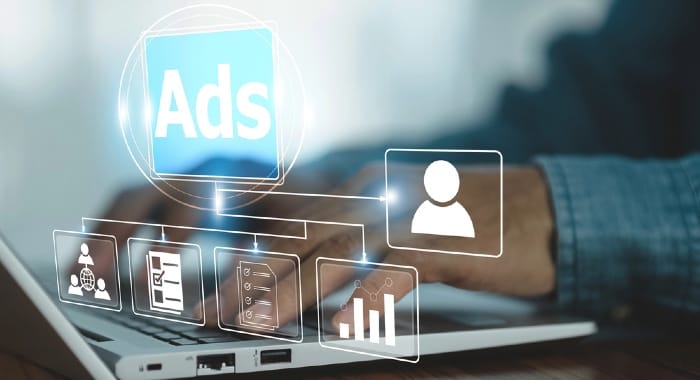
Even a modest budget on Facebook Ads or social ads can significantly increase website traffic if you target the right audience. The real power comes from audience targeting – narrowing your ads to specific locations, age groups, interests, and behaviours so you’re reaching people who are genuinely likely to be interested.
Retargeting is particularly effective. By installing retargeting pixels on your website (small pieces of code that track visitors), you can serve ads specifically to people who have already visited your site but didn’t convert. Website visitors who are retargeted are 43% more likely to convert – a significant lift from a relatively small additional spend.
Use Google Analytics and Google Search Console alongside your social media analytics tools to understand which platforms are actually sending traffic to your website and what those visitors do when they arrive. This tells you where to invest more – and where to stop wasting time.
Top Tip: Before running any paid advertising, make sure the landing page you’re sending people to is fast, clear, and has one obvious next step. Paid traffic sent to a confusing or slow page is money straight down the drain.
Don’t overlook email – social media’s quieter cousin
Strictly speaking, email marketing isn’t social media. But it works hand-in-hand with your social media strategy and it’s too effective to ignore here.
According to a Litmus survey, the average ROI of an email marketing campaign is $36 per $1 spent. And 79% of B2B marketers say email is their most effective channel for lead generation. Use your social media platforms to grow your email list – offer something genuinely useful in exchange for a sign-up, then send regular newsletters that link back to your website content.
Your social media channels build the audience. Your email newsletter converts them into regular website visitors.
A few things worth doing this week

To bring it back to Priya – she picked two platforms (Instagram and Pinterest, right for her skincare business), updated her profiles, started linking every post to a specific page on her website, and set up a simple email newsletter. Three months later, her website traffic was back up and trending in the right direction, with social media now her second-biggest traffic source after search.
None of it required a marketing degree or an expensive agency. It required consistency, a bit of strategy, and actually giving people a reason to click.
Here’s what you can do right now:
- Audit your social media profiles – add website links, a call to action, and complete any missing information
- Write one blog post this week and share it across your social media platforms with a clear reason to click through and read it
- Add social share buttons to your website so visitors can share your content directly from the page
- Set up Google Analytics if you haven’t already, so you can see which social platforms are actually sending you traffic
- Consider a QR code on any printed materials you use – business cards, leaflets, packaging – linking directly to your website or a specific landing page
Social media won’t fix everything. But used with purpose, it’s one of the most accessible and cost-effective ways a small business can drive traffic back to their website – whatever the algorithms are doing to your search rankings.